
How Many Calories Should I Eat to Lose Weight? (Women’s Guide)
Wondering how many calories to eat to lose weight? Learn how to calculate your BMR, create a safe 500-calorie deficit, and lose weight without starving.
How Many Calories Should I Eat to Lose Weight? The Realistic Guide for Mums
If you have ever tried to lose weight, you have probably been bombarded with confusing, conflicting advice about calories. Some diet plans insist you should drop straight to a restrictive 1,200 calories a day. Others claim calories don’t matter at all as long as you cut out carbohydrates or sugar.
The truth is much simpler: energy balance matters, but starving yourself is the fastest way to derail your metabolism and burn out.
Every woman’s body is unique. A busy mum chasing three toddlers all day burns far more energy than someone sitting at an office desk. Eating too few calories leaves you exhausted, triggers intense cravings, disrupts sleep, and—if you are nursing—can impact your breast milk supply.
Here is the realistic, scientifically grounded formula to calculate exactly how many calories you should eat to lose weight sustainably, without feeling deprived.
NOTE
Quick Answer: The 3-Step Calorie Deficit Formula
To lose a safe, steady 0.5kg to 1kg per week, follow these three steps:
- Calculate Your BMR (Basal Metabolic Rate): The baseline kilojoules your body burns just keeping your heart beating, lungs breathing, and organs running at rest.
- Calculate Your TDEE (Total Daily Energy Expenditure): Your BMR multiplied by your physical activity factor (daily steps, housework, pram walks, and exercise).
- Subtract 500 Calories (approx. 2,000 kJ): A daily 500-calorie deficit creates a weekly deficit of 3,500 calories—the energy equivalent of approximately 0.5kg of body fat.
- The Golden Rule: Never eat below your BMR. For most women, daily intake should never drop below 1,200 to 1,500 calories without direct clinical supervision.
Step 1: Calculate Your Basal Metabolic Rate (BMR)
Your Basal Metabolic Rate (BMR) represents the energy your body burns at complete rest over 24 hours. Think of your BMR like a car idling in the driveway: even when it isn’t moving, the engine is burning fuel.
Australian dietitians typically calculate BMR using the scientifically validated Mifflin-St Jeor equation:BMR (Women)=(10×weight in kg)+(6.25×height in cm)−(5×age in years)−161
- Real-World Example:
Sarah is 35 years old, 165 cm tall, and weighs 75 kg: BMR=750+1,031.25−175−161=1,445 calories (approx. 6,050 kJ)
Sarah needs 1,445 calories every day just to maintain basic physiological function while lying in bed.
Skip the manual math: Use our free Healthy Mummy BMR & BMI Calculator to instantly discover your baseline energy needs.
Step 2: Calculate Your Total Daily Energy Expenditure (TDEE)
Once you know your BMR, multiply it by your daily activity level to find your Total Daily Energy Expenditure (TDEE). This is the total number of calories you burn each day through work, movement, and exercise.
Activity Level Description Activity Factor Example for Sarah (1,445 BMR) Sedentary Desk job, little to no intentional exercise BMR 1.2 Lightly Active Light walking, parenting tasks, 1–3 light workouts/week BMR 1.375 Moderately Active Active parenting, on your feet, 3–5 workouts/week BMR 1.55 Very Active Physical labour, intense training 6–7 days/week BMR 1.725
Step 3: Create a Safe, Moderate Calorie Deficit
To lose body fat, you must consume slightly fewer calories than your TDEE, prompting your body to draw on stored fat for energy:
- For Safe Weight Loss (0.5kg/week): Subtract 500 calories from your TDEE.
- For Faster, Medically Safe Weight Loss (up to 1kg/week): Subtract 750 calories from your TDEE.
Continuing with our example: If Sarah is lightly active (TDEE = 1,987 calories), creating a 500-calorie deficit gives her a daily target of 1,487 calories (approx. 6,220 kJ).
Notice that 1,487 calories is still safely above her BMR (1,445 calories). Sarah will burn fat steadily without crashing her thyroid, depleting her energy, or feeling ravenous.
Why You Should NEVER Eat Below Your BMR
One of the most damaging mistakes mums make is slashing their calories down to 1,000 or 1,200 calories when their BMR is 1,500.
When you consistently eat below your BMR, your body perceives a state of famine and initiates protective metabolic adaptations:
- Metabolic Slowdown: Your body downregulates non-essential functions (body temperature drops, hair and nails weaken, and resting metabolic rate slows).
- Muscle Mass Loss: Instead of burning only fat, your body breaks down metabolically active muscle tissue for emergency fuel, making it harder to keep weight off long term.
- Surging Hunger Hormones: Levels of ghrelin (the appetite hormone) skyrocket, while leptin (the fullness hormone) plummets, making binge eating almost inevitable.
- Severe Fatigue: You burn far fewer kilojoules throughout the day because you subconsciously stop moving (a drop in Non-Exercise Activity Thermogenesis, or NEAT).
How Many Extra Calories Do You Need When Breastfeeding?
If you are currently breastfeeding, do not follow a standard low-calorie diet.
Producing breast milk requires significant energy:
- Exclusive Breastfeeding: Requires approximately 1,500 to 2,000 kJ (350 to 500 additional calories) per day.
- Calorie Floor for Nursing Mums: Breastfeeding mothers should generally never consume fewer than 1,500 to 1,800 calories per day.
Cutting calories too drastically can trigger a sudden drop in breast milk supply. By using a modest deficit that accounts for nursing, you can steadily lose baby weight while fully protecting your milk supply. Check out our comprehensive guide on breastfeeding and weight loss for practical tips.
What Does a 1,500-Calorie Day Look Like on The Healthy Mummy?
Eating for weight loss should never feel like deprivation. Here is an example of a balanced, delicious 1,500-calorie day:
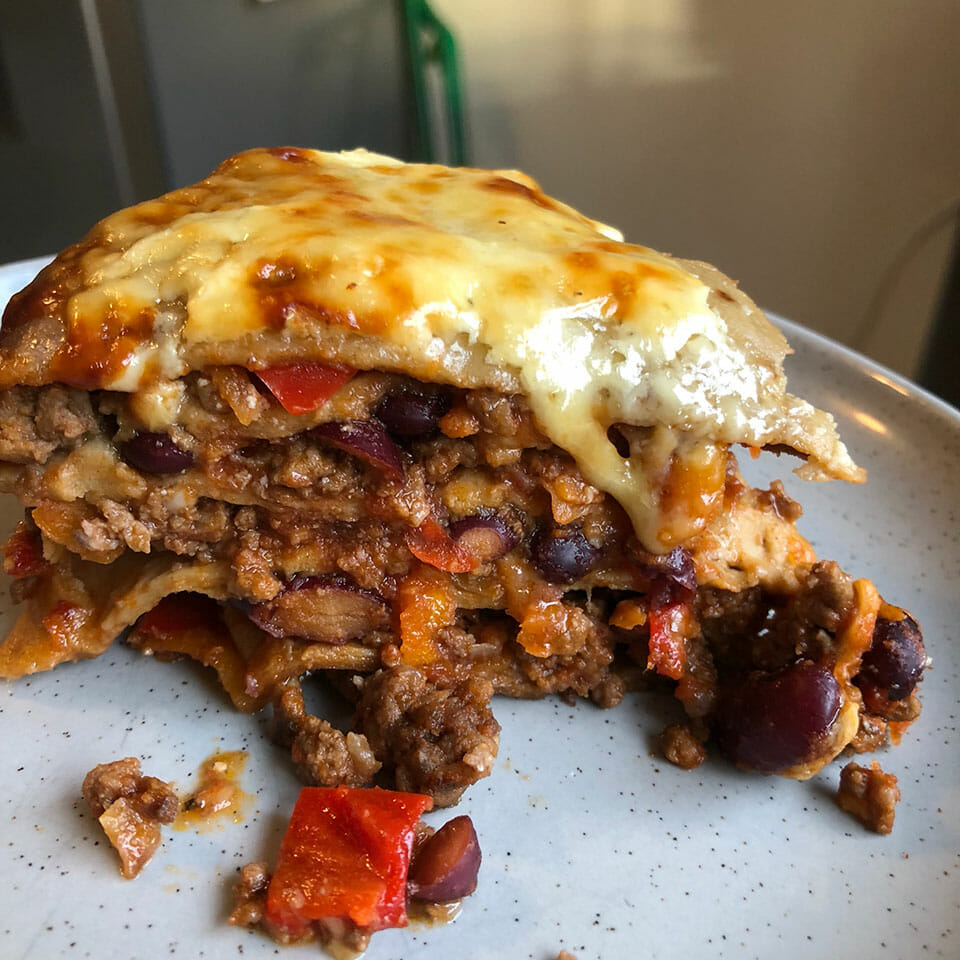
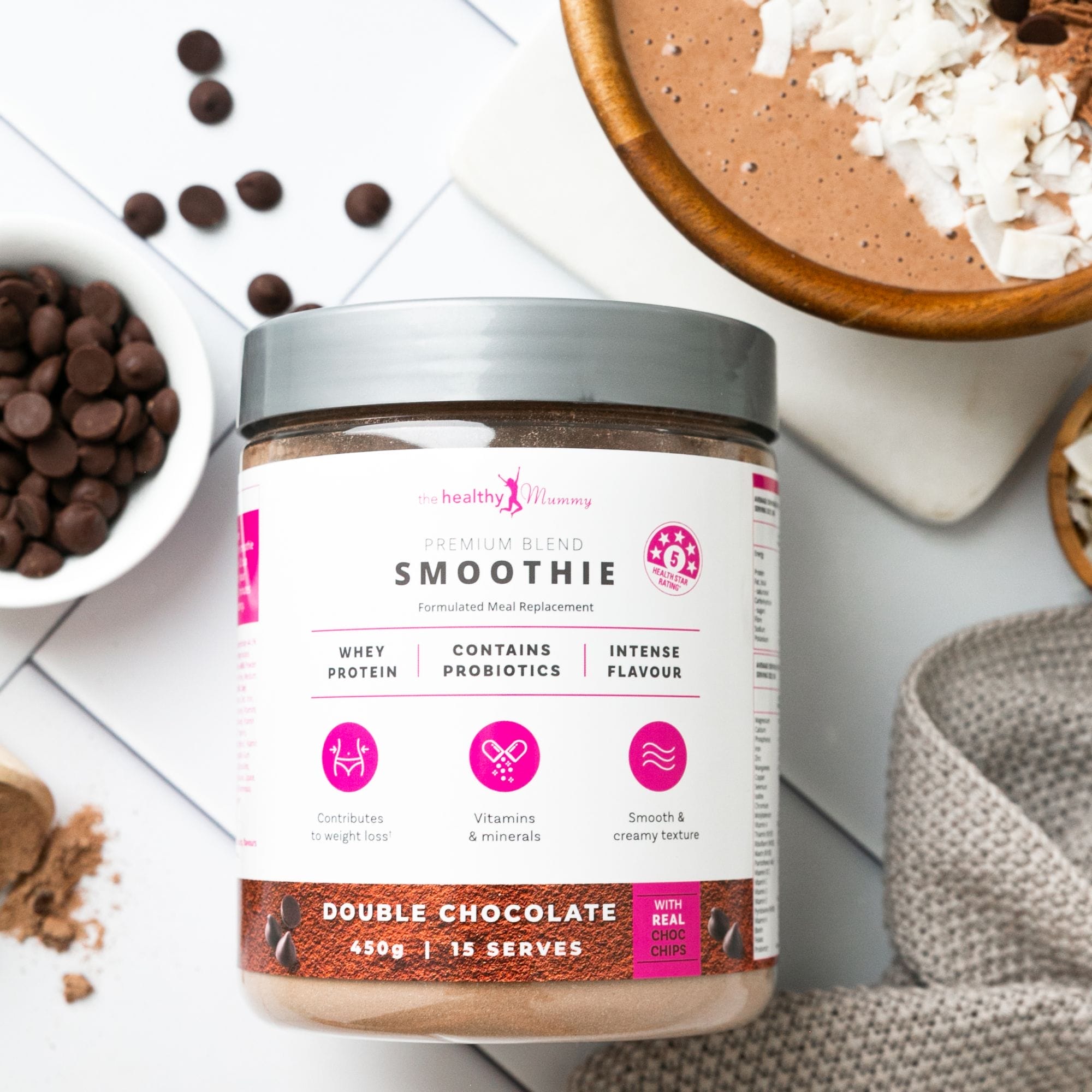
Meal Occasion What You Eat Calories Protein Breakfast Healthy Overnight Oats made with rolled oats, chia seeds, almond milk, and fresh berries 325 kcal 14g Morning Snack 1 small apple with 1 metric tbsp 100% natural peanut butter 160 kcal 4g Lunch The Healthy Mummy Vanilla Smoothie blitzed with 250ml unsweetened almond milk and ½ frozen banana 240 kcal 22g Afternoon Snack A small 30g portion of healthy weight-loss nuts (almonds and walnuts) 175 kcal 5g Dinner One-Pot Stovetop Beef Lasagne served with a crisp garden salad 385 kcal 31g Evening Treat 2 squares (20g) of 70%+ dark chocolate with a warm herbal tea 115 kcal 2g Daily Total Delicious, satisfying whole foods with zero starvation 1,400 kcal 78g Protein
How The Healthy Mummy Takes the Math Out of Calorie Counting
You don’t need to spend hours weighing food or logging numbers into complicated spreadsheets.
The 28 Day Weight Loss Challenge App does all the heavy lifting for you:
- Personalised Energy Calculation: Enter your age, height, weight, activity level, and breastfeeding status, and the app automatically calculates your personalized daily calorie target.
- Customisable Meal Plans: Select from over 6,000 family-friendly recipes that fit your exact calorie budget.
- Flexibility for Real Life: Swap any meal or snack with a single tap, and your daily macros automatically adjust so you always stay on track.
Frequently Asked Questions
Can I lose weight by eating 1,200 calories a day?
While a 1,200-calorie diet will cause initial weight loss, it is excessively restrictive for most active adult women and mothers. For many women, 1,200 calories is well below their Basal Metabolic Rate (BMR), leading to muscle loss, sluggishness, nutrient deficiencies, and rebound weight gain. A moderate deficit of 1,400 to 1,600 calories is far more sustainable and effective.
What is the difference between calories and kilojoules?
Calories and kilojoules are simply two different units used to measure energy. Kilojoules (kJ) are the metric measurement used on Australian food nutrition labels, while calories (kcal) are the imperial unit commonly used in fitness apps. To convert, multiply calories by 4.2 to get kilojoules (e.g. 1,500 calories ≈ 6,300 kilojoules).
Why am I not losing weight in a calorie deficit?
If you believe you are in a calorie deficit but the scale is not moving, the most common causes are: uncounted cooking oils and sauces, liquid calories, underestimating weekend portion sizes, or temporary water retention caused by high sodium or hormonal changes. Read our guide on what water weight is and how to flush it to understand scale fluctuations.
How often should I recalculate my calorie needs?
You should recalculate your BMR and TDEE every time you lose 4kg to 5kg of body weight, or whenever your daily physical activity level changes significantly. As your body weight decreases, your body requires slightly less energy to move and function.



BMI Calculator
Welcome to our FREE BMI Calculator. The Healthy Mummy has helped 100,000's of mum lose weight and regain their body confidence and we are confident that we can help you do the same too.rnrnUse this BMI calculator to check your body mass index (BMI) and find out if you’re a healthy weight
Is Body Mass Index reliable?
Please enter your weight and height as accurate as possible. Your results will appear here.




Be part of our friendly and supportive community
Want FREE delicious recipes, fitness tips and great specials?
© 2026 The Healthy Mummy. All Rights Reserved.




Apple and the Apple logo are trademarks of Apple Inc., registered in the U.S. and other countries. App Store is a service mark of Apple Inc., registered in the U.S. and other countries. | Google Play and the Google Play logo are trademarks of Google LLC.



19,747 Reviews

7,743 Reviews